
How to Register a U.S. Business from India

Registering a U.S. business from India is legal, common, and increasingly necessary for founders who want access to global customers, U.S. payment processors, Amazon FBA, and international investors.
However, the process is highly procedural. Missing a single step can block banking, freeze payment accounts, or trigger IRS penalties.
This guide walks you through every stage, every document and every decision for how to register a U.S. business from India, without relocating, obtaining an SSN, and relying on guesswork.
What You Should Register
Most online content treats LLC vs C-Corp as a high-level comparison.
For Indian founders, this distinction has direct tax, compliance, banking, and platform consequences.
Below is the decision matrix, followed by an explanation of what it actually means in practice.
LLC vs C-Corp: India-Based Founders
| Criteria | LLC | C-Corp |
| Best for | Amazon FBA sellers, Shopify brands, solo founders, service businesses | VC-backed startups, SaaS, equity-driven companies |
| Tax flow | Pass-through by default | Entity-level taxation |
| Compliance complexity | Moderate | High |
| Investor readiness | Limited | Strong |
| Flexibility | High | Low |
| Ongoing cost | Lower | Higher |
What This Table Doesn’t Tell You (But You Need to Know)
1. “Pass-Through” Does NOT Mean “Tax-Free”
A common misunderstanding among Indian founders is that an LLC is “simpler” or “lighter” because it is a pass-through entity.
In reality, a foreign-owned single-member LLC is disregarded for U.S. income tax, but it is not disregarded for compliance.
This means you may owe no U.S. income tax, but you must still file mandatory information returns, even with zero revenue.
2. C-Corp Is Not “More Legitimate” by Default
Some founders choose a C-Corp to appear as a more serious startup, since investors prefer C-Corps over LLCs.
But for Indian founders who sell on Amazon, run DTC brands, or bootstrap, it’ll create unnecessary tax and compliance friction.
It’ll involve corporate tax returns at the U.S. level, withholding on dividends, more complex filings, and higher accounting and legal costs.
3. Converting Later Is Possible, But Not Neutral
You can convert an LLC to a C-Corp later, but the conversion can trigger tax consequences.
You have to update your banking records, business documents, and the platforms you’re using.
Practical Entity Recommendations (India-Specific)
Choose an LLC if:
- You are selling physical goods (Amazon FBA, Shopify, DTC)
- You want operational speed and flexibility
- You are not fundraising from U.S. VCs in the next 12–24 months
- You want to minimize structural tax exposure
Choose a C-Corp if:
- You are building a venture-scale company
- You expect U.S. investors to require a Delaware C-Corp
- You will issue stock, options, or SAFE notes
- You are prepared for higher compliance overhead
Note: This decision should be made before formation, not corrected after.
| Business structure | Ownership | Liability | Taxes |
| Sole proprietorship | One person | Unlimited personal liability | Self-employment taxPersonal tax |
| Partnerships | Two or more people | Unlimited personal liability unless structured as a limited partnership | Self-employment tax (except for limited partners)Personal tax |
| Limited liability company (LLC) | One or more people | Owners are not personally liable | Self-employment taxPersonal tax or corporate tax |
| Corporation – C-Corp | One or more people | Owners are not personally liable | Corporate tax |
| Corporation – S-Corp | 100 people or fewercertain trusts and estatesno partnerships, corporations, or non-resident aliens | Owners are not personally liable | Personal tax |
Best States for Indian Founders
The U.S. is not a single corporate jurisdiction. Each state is effectively its own regulatory environment, with different filing rules, compliance obligations, and court systems.
For Indian founders, state choice affects bank approval rates, Amazon and Stripe scrutiny, and legal and annual compliance costs.
Delaware: The Best Choice for a Reason
Delaware LLC is not popular by accident. It offers business-friendly corporate laws, specialized business courts, fast processing times, and quick acceptance by banks, payment processors, marketplaces, and investors.
For non-U.S. founders, this familiarity matters more than small cost differences.
Wyoming: Cost-Efficient, but Not Neutral
Wyoming is often marketed as a cheaper option that offers more privacy. While this is technically true, Indian founders should understand the trade-offs:
- Some fintech banks apply additional diligence
- Certain payment processors flag Wyoming entities for review
- Less institutional familiarity compared to Delaware
🔖 Also Read: How to Register an LLC in Wyoming
Why Other States Are Rarely Optimal for Indian Founders
States like California, New York, and Texas impose higher fees, additional reporting requirements, and nexus compliance if you have no U.S. presence.
So, unless you have physical operations in that state or a legal requirement to register there, we recommend skipping them since they generally add complexity without benefit.
State Selection Summary
If your goal is speed, hassle-free approval, predictability, and platform compatibility, Delaware is the safest choice.
Cost optimization comes after operational stability, not before. At this stage, three foundational decisions must already be correct:
- Entity type aligns with business reality
- State choice minimizes downstream friction
- Expectations around tax and compliance are realistic
Everything that follows, EIN issuance, banking, payments, and compliance, depends on these decisions being correct.
Information & Documents You Need (Before You Start)
Most founders assume company registration is the hardest part of the process. In reality, the formation step is the easiest. It is largely automated, fast, and forgiving.
The real difficulty lies in information consistency. This section exists to eliminate that risk.
Every system you interact with after formation, state registries, the IRS, banks, payment processors, and marketplaces, will validate the information you provide.
They do not share a single master database. Instead, they rely on cross-checking logic.
This means a detail that seems minor (like address formatting or name order) can later cause account rejections, delays, or freezes, even if your company was legally formed correctly
Personal Information
As an Indian founder, you are not just an owner.
You are the foreign responsible party. This designation follows you across EIN issuance, bank KYC, payment processor onboarding, and IRS compliance reviews.
If your personal details are inconsistent, the company itself is subject to additional scrutiny.
✔️ Full Legal Name
Your name must be standardized exactly as it appears on your passport. U.S. systems are literal, not contextual.
In order to avoid inconsistencies or spelling variations across documents, choose one canonical version of your name (passport version) and use it everywhere, without exception.
If your passport says, “Rahul Kumar Sharma, ” then do not use “R. K. Sharma” or any other abbreviations.
✔️ Passport
Your passport is not only proof of identity. It is a KYC anchor that serves as your nationality declaration and sanctions screening input.
Submit a clear, uncut scan of your passport, with no glare or cropping. Also, make sure it has a validity of at least 6 months.
Banks and PSPs increasingly use automated OCR alongside human review. Poor scans delay approval.
✔️ Indian Residential Address
U.S. systems do not “recognize” Indian geography. They only check internal consistency. Your Indian address must be real, complete, and consistently formatted across all filings.
Double-check to avoid incorrect filings where:
- Addresses are abbreviated inconsistently
- PIN codes are missing
- Different spellings are used for the same locality
✔️ E-mail and Phone Number
Your e-mail and phone number become permanent contact points, security verification tools, and recovery channels.
Use business-stable contact details, not temporary or personal-only ones.
Changing them later can trigger re-verification requests, temporary account locks, or manual reviews.
Business Information
✔️ Business Name
Your business name is not just a label. It is a legal identifier that propagates into IRS records, bank accounts, contracts, and platform dashboards.
You can change it after registration, but it’s costly and causes unnecessary disruption.
doola recommends choosing a name that is distinct, neutral, and non-restrictive
Avoid using regulated terms, geographic claims, and industry-specific buzzwords that invite scrutiny.
Some states also have rules that restrict businesses from using certain words or phrases.
Create a list of names that suit your business, product, or niche.
If you are having difficulty coming up with names, you can ask AI tools for recommendations that fit your needs.
✔️ Business Purpose
Many founders just put down e-commerce, online business, or technology service provider under a business purpose, which is not sufficient.
Banks and payment processors require operational clarity, understanding of the revenue model, and risk classification.
A better example would be, “Direct-to-consumer sale of private-label wellness products through online marketplaces and company-owned storefronts.”
This tells reviewers what you sell, how you sell, and where revenue comes from.
A clear purpose reduces manual reviews.
✔️ Registered Agent Address
Your registered agent’s address becomes the official legal address for your company to receive government and court notices, and it serves as a data point banks may use as a reference.
As per rules, it must be U.S.-based and active year-round during business hours to receive important documents.
Using unreliable or ultra-cheap agents increases the risk of missed notices, which can have legal consequences.
✔️ Ownership Structure
Banks treat ownership ambiguity as a red flag.
Ownership must be declared consistently across state filings, EIN application, Operating Agreement, and bank disclosures
This will help you avoid common issues such as undisclosed co-founders, informal “verbal” ownership splits, and mismatched ownership percentages.
Documents You Will Receive
Many founders collect documents but do not understand how they are used downstream. That lack of understanding later causes friction.
1. Certificate of Formation / Incorporation
This document establishes the legal existence of your LLC, its jurisdiction, its compliance obligations, and its formation date.
Banks and platforms use it to verify legitimacy, confirm state registration, and cross-check entity details.
Incorrect certificates cannot be “explained away.” They must be corrected at the state level.
2. Operating Agreement (LLC) or Bylaws (C-Corp)
These are internal governance documents, yet external parties rely heavily on them. They are used to verify ownership, confirm signing authority, and understand the management structure.
A missing or poorly drafted agreement can lead to bank rejections, payment processor delays, and compliance escalations.
3. EIN Confirmation Letter
This is not optional documentation. The EIN letter is proof of federal recognition required for banking, tax filings, and platform verification.
Most banks and payment processors will not proceed without it.
After issuance, keep it secure since recovery can take weeks or months if you lose it.
Why Preparation Errors Break Things Later
To understand why this section matters, consider a real failure chain:
The founder uses an abbreviated name during formation → EIN issued with full passport name → Bank application uses an abbreviated version again → Bank flags mismatch → Manual review triggered → Approval delayed or rejected
So, before moving to formation, confirm:
- One canonical founder name is used everywhere
- One standardized Indian address format
- Clear, specific business purpose
- Ownership structure finalized
- Registered agent selected and verified
- Contact details are stable and monitored
Step-by-Step: How to Register a U.S. Business from India
This stage is where your company becomes a legal entity under U.S. law.
While it appears simple on the surface, formation choices permanently shape how your company is interpreted by:
- State authorities
- The IRS
- Banks and fintech KYC teams
- Marketplaces like Amazon
- Payment processors
Formation errors rarely cause immediate failure. Instead, they surface weeks or months later, when fixing them is slow, costly, or operationally disruptive, which we’ll help you avoid.
Step 1: Choose and Verify Business Name
Checking name availability is not just about avoiding duplicates. It establishes the primary identifier your company will use across every system it touches.
Once registered, your company name is:
- Embedded in state records
- Used verbatim on the EIN
- Reflected in bank accounts
- Displayed on payment processor dashboards
- Shown to customers and partners
So, if you decide to change it later, it’ll require state amendments, IRS notifications, bank updates, and platform re-verification. This is why name choice deserves deliberate thought.
State Databases: How Availability Is Actually Determined
Each state maintains its own registry where you can check the availability of your desired name.
Two names can look different to humans but still be rejected if the state considers them not distinguishable.
That’s why you need to use the state registry to do a name availability check that is exact-match based, suffix-sensitive (LLC vs Inc.), phonetic, or sometimes literal.
Always check for exact spelling, plural vs singular, punctuation, and entity suffix placement with each name on your list to finalize 2–3 alternatives.
You can reserve your chosen name with the Delaware Division of Corporations for $75, which will guarantee that your name is held for you for a period of 120 days.
Naming Rules That Might Confuse Indian Founders
Common rejection triggers include missing entity suffix (“LLC”, “Inc.”), use of restricted words (“Bank”, “Trust”, “University”), and implicit claims (“USA”, “Federal”, “National”).
Restricted terms are not cosmetic issues. Using them without approval can delay formation, trigger enhanced scrutiny later, and result in banking or PSP rejections, even if the state allows the name.
However, your legal entity name does not have to match your brand. Many founders safely register a neutral legal name, operate publicly under a brand name, and use “doing business as” (DBA) later if needed.
This reduces regulatory friction while preserving branding flexibility.
Step 2: Appoint a Registered Agent
In U.S. law, every company must have a reliable legal contact within the jurisdiction where it is registered.
Since you don’t have a physical presence in the U.S., the registered agent receives lawsuits (service of process), receives state and tax notices, and acts as the state’s official communication channel on your behalf.
This requirement exists so the state and courts can always reach the company, even if owners are overseas.
Indian founders often wonder whether a virtual address, a friend’s address, or a service address can substitute for a registered agent.
Legally, the answer is no.
A registered agent must maintain a physical address in the state, be available during business hours, and be formally listed with the state.
Using an invalid agent risks missed legal notices, default judgments, and administrative dissolution.
What Banks and Platforms Infer From Your Registered Agent
Banks and PSPs do not officially “evaluate” your registered agent, but they infer risk from it. Red flags include:
- Ultra-low-cost agents with poor reputations
- Inconsistent agent addresses across filings
- Agents known for mass registrations with no support
We recommend high-quality registered agent services that reliably forward mail, send compliance reminders, and maintain accurate records.
Annual Renewal: Why Missing It Is Dangerous
Registered agent services renew annually.
If your agent lapses, the state may mark your company as non-compliant, which could result in losing your good standing, frozen bank accounts, or payment delays.
This is not hypothetical. It happens frequently.
Step 3: File Formation Documents With the State
Filing formation documents registers your company as a legal entity with the state and establishes its internal structure.
However, the state does not validate business legitimacy, revenue model, or tax compliance readiness. Those checks come later, from other systems.
LLC Formation
✔️ Articles of Organization
Once you’ve determined the name of your LLC, which complies with Delaware’s naming requirements, you can prepare and file the Certificate of Incorporation with the Delaware Secretary of State.
The information required in articles of incorporation varies slightly from state to state. This document includes key details about your business, including its name, address, registered agent information, and LLC type.
For Indian founders, manager-managed LLCs often work better because banks prefer clear authority delegation. This choice does not affect taxes, but it affects perception and operations.
By appointing a U.S.-based person to an authority position, you can separate ownership from control and simplify multi-founder scenarios.
You can obtain the forms to incorporate your LLC at the Delaware Division of Corporations website. These forms are PDF fillable and can be submitted via their Document Filing and Certificate Request Service or by mail.
If you choose to mail, you may need to download a fillable PDF cover sheet and submit it with your name or entity name, return address, and phone number.
You may either use the Document Filing and Certificate Request Service or mail in your completed form to their office at
Division of Corporations
John G. Townsend Building,
401 Federal Street, Suite 4,
Dover, DE 19901.
You’ve to pay the filing fees upon submission of your request. The filing fee for articles of incorporation is usually somewhere between $50 and a few hundred dollars.
The standard filing fee to form an LLC in Delaware is $110 (Certificate of Formation). Expedited service options are available, such as $50 for 24-hour service or $100 for same-day processing.
✔️ Filing Method: DIY vs Service Provider
While direct state filing yourself is cheaper, it’s much slower and prone to costly errors because there’s less guidance.
On the other hand, filing through a professional service provider is much faster and reduces error risk for a minimal fee.
For first-time founders, error reduction often outweighs speed.
C-Corp Formation
C-Corp formation requires more precision because the equity structure is set up front, mistakes affect future fundraising, and corrections require long legal intervention.
The C-Corp formation process is largely the same as LLC formation, including choosing a business name, appointing a registered agent, and filing Articles of Organization.
However, there are some additional steps:
- Create Corporate Bylaws: They’re legally binding documents that define the corporate structure and outline the duties and responsibilities of directors, officers, and shareholders.
- Appoint Directors and Officers: You’ve to appoint the initial board of directors with the shareholders. The board of directors then elects the corporation’s officers, such as the CEO, CFO, and secretary.
- Issue Stock: C-Corps must issue stock to their shareholders, who thereby hold ownership in the corporation, and shareholders have the right to vote on important corporate matters.
The amount, value, and type of stock that the corporation can issue are stated in its certificate of incorporation.
Step 4: Receive and Verify Formation Confirmation
After approval, you should receive state confirmation, filed formation documents, and a filing receipt. These documents prove legal existence.
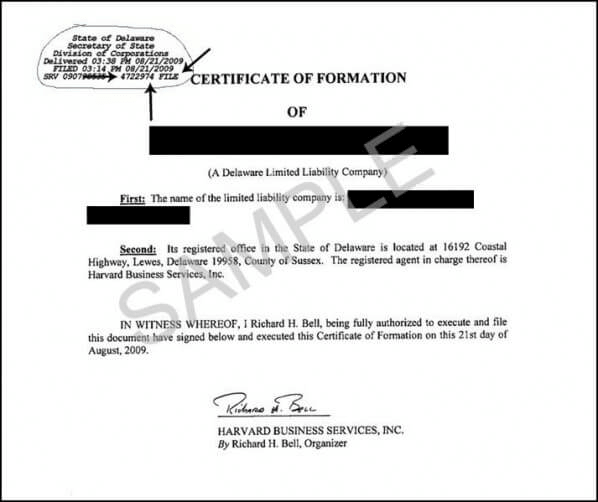
Keep these safe, and always perform independent verification after approval. Do not rely solely on emailed PDFs.
Search your company in the state registry to verify name, status, and date, and download copies from the official source.
Why Formation Errors Surface Late
Formation feeds data into IRS EIN systems, bank KYC workflows, payment processor onboarding, and marketplace verification engines.
While a mismatch at formation does not always cause immediate rejection, it creates inconsistencies that can lead to more problems down the road.
Formation is therefore not just a legal step. It is a data integrity event.
Step 5: Apply for EIN
Formation makes your company exist at the state level. The EIN establishes your company’s existence at the federal level.
Until an EIN is correctly issued and paired with proper internal documents, you can’t use your company for banking, payments, taxes, marketplaces, and long-term compliance.
What an EIN Actually Represents
An EIN (Employer Identification Number) is issued by the Internal Revenue Service (IRS). It is not just an identifier. It is a federal profile for your company. Once issued, the EIN links together:
- Your company’s legal name
- Entity type (LLC or C-Corp)
- Tax classification
- Responsible party (you)
- Address history
Every major institution you deal with later, banks, payment processors, and Amazon, will assume the EIN record is authoritative. If it’s wrong, they will not debate it. They will reject you.
However, EIN applications fail disproportionately for Indian founders due to foreign residential addresses, mismatches in name formatting, misunderstandings about the responsible party, and a lack of SSN or ITIN.
The IRS does not reject EINs because you are foreign. It rejects them because the application logic is broken.
Therefore, you have to be more careful with your EIN application to ensure swift approval.
EIN Application Methods: What Happens Internally
Most U.S. founders can apply online and receive an EIN immediately using the IRS assistance tool.
However, founders outside the U.S. usually can’t do this because the online application requires an SSN or ITIN.
If you don’t have a personal U.S. taxpayer ID, your only option aside from mail is to fax an application to the IRS and wait to receive the EIN back by fax.
Phone applications are fast, but mistakes made verbally are immediately embedded into the IRS system and are harder to correct than fax errors.
For first-time Indian founders, fax or guided service filing is safer.
| Method | What the IRS Does | Risk Profile |
| Fax (Form SS-4) | Manual human review | Slower, forgiving |
| Phone | Live agent creates record | Fast, unforgiving |
| Service provider | Guided or proxy filing | Lowest error risk |
Form SS-4
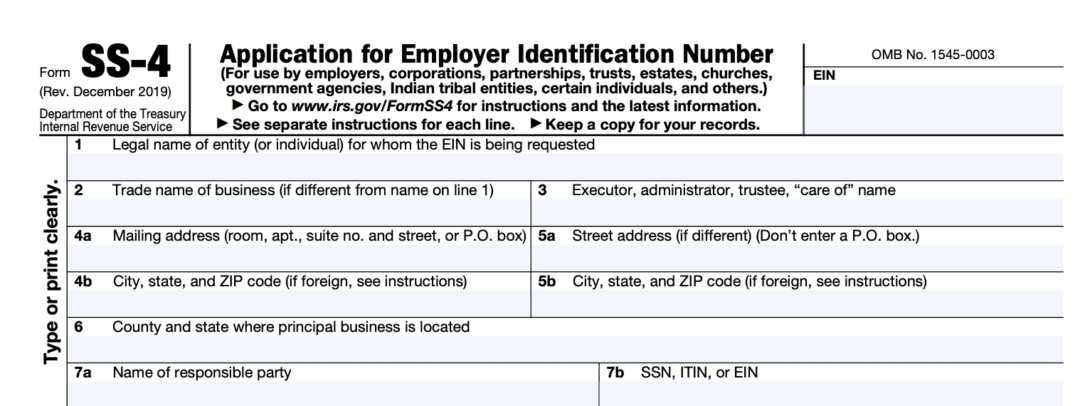
For non-U.S. founders, the EIN application method involves completing Form SS-4, the Application for Employer Identification Number.
Remember to indicate the foreign status of their entity and follow the instructions for foreign entities, which include not providing an SSN or Individual Taxpayer Identification Number (ITIN).
Let’s walk you through field by field to ensure you put the correct information.
✔️ Lines 1–2: Legal Name & Trade Name
Put down the legal name and trade name of your LLC. Make sure it’s similar to the names in the state formation documents.
If there are any mismatches, like using L.L.C. instead of LLC vs, adding or removing commas, or capitalization, there’ll be consequences:
- EIN issued under an incorrect name
- Banks are unable to verify the entity
- Payment processors are looping verification requests
✔️ Line 7a–7b: Responsible Party
Fill out the name and identifier for a designated individual (a principal officer or controlling individual) who has control over your LLC or is entitled to the entity’s funds and assets.
If you’re putting your name, ensure that the name you put down here matches the name on your passport.
The SSN/ITIN field must explicitly say “Foreign.” Leaving this blank is a hard failure.
Using the company name here is also incorrect and will result in rejection.
✔️ Line 9a: Entity Type
Put down your entity type, which should be an exact match from your state formation documents.
You can’t change from a multi-member LLC to a multi-member LLC or Corporation.
If you submit incorrect information, the IRS assigns an incorrect tax classification and risks exposure of Form 5472.
✔️ Address Fields
Use your Indian address here, not your business address or registered agent address.
Do not mix Indian and U.S. addresses arbitrarily.
Once you’ve completed the form, you can apply for an EIN from outside the US using these methods:
- Phone application: You can apply for an EIN by contacting the IRS using the designated number, which can be found on the IRS website. The person making the call must be authorised to receive the EIN and answer questions regarding Form SS-4.
- Fax application: International applicants can fax a completed Form SS-4 to the IRS. If they provide a return fax number, the IRS can send the EIN within four working days.
- Postal application: International applicants can submit a completed Form SS-4 to the IRS by post. This is the slowest method, taking about four weeks to obtain an EIN.
EIN Confirmation Letter
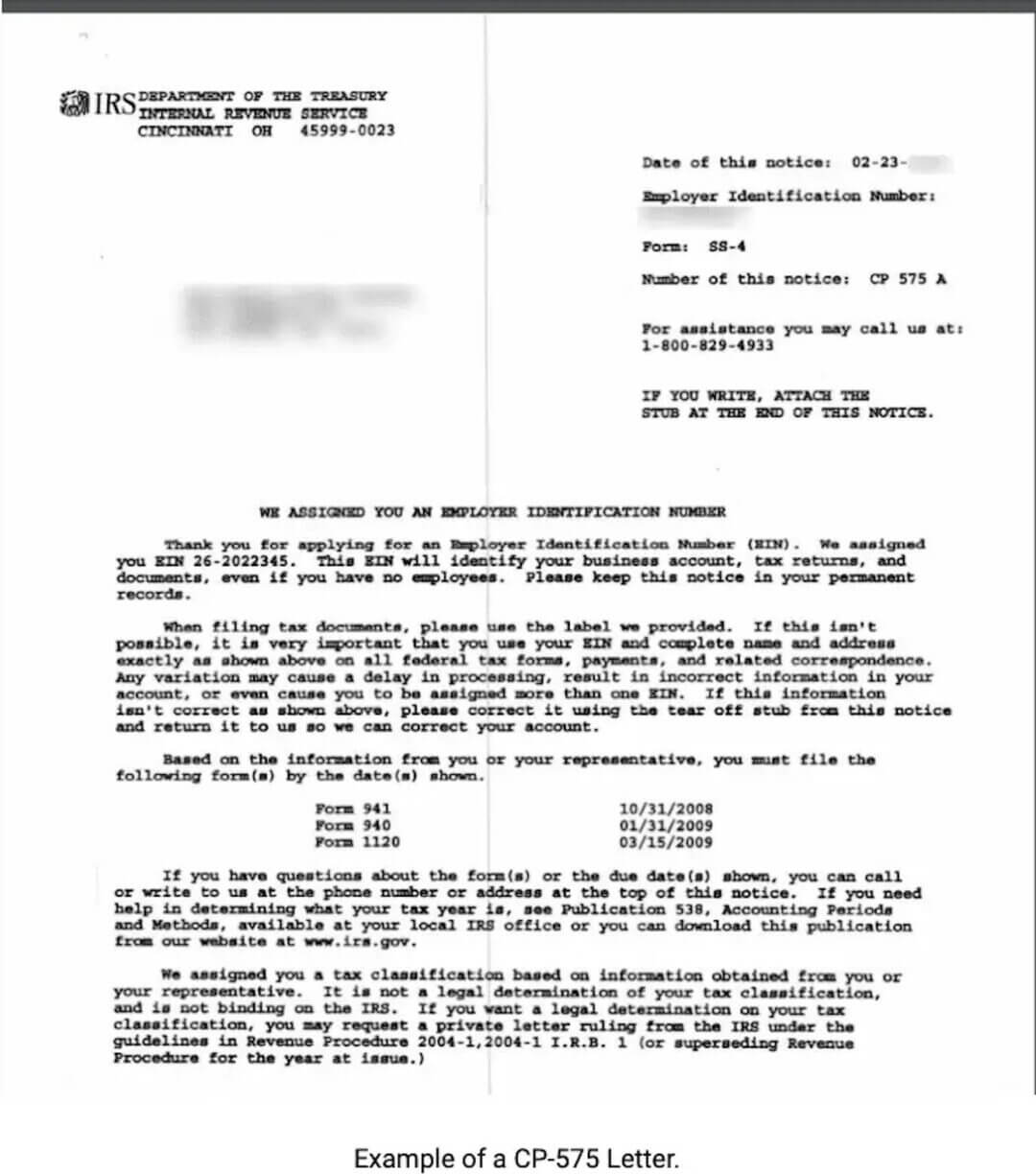
Once your application gets approved by the IRS, you’ll be issued a confirmation letter that proves federal recognition.
Keep it safe since it’s required by banks and PSPs and often requested again years later for KYC and tax filing.
Common EIN Errors to Avoid
Fortunately, the most common rejection reasons are just simple data entry errors, which can be easily corrected and resubmitted.
However, some mistakes can also lead to immediate rejection.
- Business Name Mismatch (Error Code R0000-922): Even minor discrepancies, omission of a comma, “Inc.” versus “Incorporated,” or even an incorrect address-will result in a rejection.
- Entity Type Discrepancy: The “entity type” (e.g., nonprofit vs. corporation) must match what is in the IRS database.
- Address Discrepancies: Using an address that does not match the IRS records, or using different states for incorporation and physical address can cause issues.
- Responsible Party Change: If the “responsible party” has already obtained an EIN online previously, they may be restricted from obtaining another one.
This is why experienced founders treat EIN issuance as the most sensitive step.
Step 6: Draft Internal Company Documents
Many founders think internal documents are formalities. Banks and regulators do not. These documents solidify the company’s liability protection and separate the business from the owners.
Apart from your Certificate of Incorporation and EIN confirmation letter, your LLC may also need several other types of documents that are not typically filed with the state but are kept in the company’s records.
Operating Agreement
An operating agreement is a document that defines ownership percentages, member roles, and profit distribution.
Although an operating agreement isn’t required in all states, it’s highly recommended, as it can help resolve disputes and define each member’s rights and responsibilities.
Also, banks and Payment service providers use it to identify the controlling individual of the company, the signing authority, and whether the entity is real or shell-like.
For Indian founders, banks focus on ownership percentage, manager vs member authority, signature authority, and profit distribution logic.
These clauses are cross-checked against your EIN data, bank applications, and KYC disclosures. If they find any inconsistency, you may face a manual review or rejection.
Even with a single owner, we recommend drafting an Operating Agreement to establish ownership, define management structure, and set guidelines for adding new members or investors.
You can use the samples or online tools to draft your Operating Agreement, or hire a business attorney, who typically charges a flat fee of $500 to $1,500.
Bylaws & Share Issuance (C-Corp)
C-Corps require more paperwork because they separate ownership (shareholders), control (board), and management (officers), which requires documentation.
Internal company documents are often misunderstood as “formalities.” But in reality, they future-proof your operations.
For foreign-owned U.S. companies, these documents are used by banks, payment processors, and sometimes even marketplaces to determine whether your business is real, controlled, and compliant.
Think of these documents as the instruction manual for how your company works internally, and the evidence external institutions use to trust you.
These bylaws govern how a company is operated and are among the first items the board of directors creates.
With multiple authorities and stakeholders involved, you must set some ground rules that will be followed throughout the organization’s existence.
Initial Share Issuance
Initial share issuance establishes who owns the company and in what proportions, and it must be supported by proper approvals and records.
However, authorizing shares during incorporation does not automatically give anyone ownership. Ownership is created only when shares are formally issued and documented.
Many founders make the mistake of issuing shares without board approval or written resolutions.
While these mistakes do not block early operations, they may cause serious issues during fundraising or acquisition.
Board Resolutions
Board resolutions create a clear record of decision-making and protect the company during audits, compliance reviews, and future transactions.
Even banks and investors frequently request board resolutions to confirm that the individual opening or operating the account has been properly authorized.
Without these resolutions, banks may pause onboarding or require additional documentation.
Step 7: Open a U.S. Business Bank Account From India
Opening a U.S. business bank account is the moment your company transitions from a legal entity on paper to a functioning financial system.
For Indian founders, this step is often more complex than company registration itself, not because it is impossible, but because banks apply stricter scrutiny to foreign-owned businesses.
Banks are not simply verifying your documents. They are assessing whether your company appears operational, transparent, and low-risk.
This means they evaluate not only what you submit, but also how logically your business model, ownership structure, and financial flows fit together.
Bank Types That Work for Indian Founders
Not all U.S. banks are equally accessible to non-resident founders.
| Type | Examples | Notes |
| Fintech banks | Mercury, Relay | Remote onboarding, typically no SSN required |
| Traditional banks | Chase, Bank of America | Often requires an in-person visit to the U.S. |
Fintech platforms like Mercury have emerged as the most practical option for Indian founders because they are designed for remote-first businesses and international ownership structures.
Their onboarding processes are built around digital verification, and they are generally more familiar with foreign-owned LLCs and C-Corps.
You can open a free checking and savings accounts with no minimum balance and enjoy benefits like business debit cards, expense management, and third-party integrations.
Traditional banks, on the other hand, are more conservative. They frequently require founders to visit the U.S. in person to complete account opening.
Required Documents
To open a U.S. business bank account, you must demonstrate that your company is legally formed, federally recognized, and properly governed.
Banks typically request a core set of documents to verify these elements. The most commonly required documents are:
- EIN confirmation letter
- Formation documents (Certificate of Formation or Incorporation)
- Operating Agreement (for LLCs) or Bylaws (for C-Corps)
- Founder’s passport
What matters most is not just having these documents but ensuring they are consistent with each other.
If your company name, address, ownership details, or management structure differ across documents, banks interpret this as a risk signal and escalate the review.
Common Rejections & Fixes
For Indian founders, the most common issue is not illegality. It is a lack of clarity.
✔️ Business Description Issues
Banks want to understand what you sell, who you sell to, and how money flows through your business.
When this information is vague, they assume uncertainty, which translates into risk. When your business model is easy to visualize, banks are more comfortable approving your account.
✔️ Address Mismatches
Banks do not expect you to have a U.S. physical office, but they do expect internal consistency.
When addresses do not align, they question whether the company’s structure is properly understood by its owner.
The fix is simple but critical: standardize your address format across all documents and applications.
✔️ High-Risk Categories
Certain industries are inherently riskier for banks. These include sectors like supplements, digital goods, crypto-related services, and highly regulated products.
Being in a high-risk category does not automatically lead to rejection, but it may require additional explanations about suppliers, compliance measures, and platform safeguards.
Indian founders in such industries should proactively clarify how their business operates within legal and platform rules. Transparency reduces suspicion and shortens review cycles.
Banking Is a Long-Term Relationship, Not a One-Time Approval
Many founders assume that once a bank account is approved, the process is over. In reality, banks continuously monitor account activity.
For foreign-owned companies, maintaining consistency between what you told the bank during onboarding and how your business actually operates is essential.
The closer your real-world activity aligns with your documented business model, the smoother your banking relationship will remain.
Post-Registration Compliance
U.S. compliance is tied to existence, not activity. This means that a dormant or pre-revenue company is often subject to the same filing requirements as an active one.
Missing these requirements does not usually immediately block operations, but it creates penalties, legal risk, and downstream friction with banks, payment processors, and future partners.
Federal-Level Compliance
Once your company is recognized at the federal level, the IRS expects periodic filings based on your entity type and ownership structure.
Annual Tax Filing Obligations
Every U.S. company must file an annual federal tax return, even if:
- It has no revenue
- It has no expenses
- It never opened a bank account
The specific return depends on your entity type and tax classification. The purpose of these filings is not always to collect tax. It is to maintain visibility and reporting continuity.
For Indian founders, the most common mistake is assuming that “no activity” means “no filing.”
In reality, failing to file required returns can trigger penalties, notices, and compliance flags that compound over time.
Form 5472
Form 5472 is one of the most critical and most frequently missed filings for Indian founders operating U.S. LLCs.
If your LLC is U.S.-registered and at least 25% foreign-owned, you are required to file Form 5472 annually, even if the company had zero income.
This form is used by the IRS to track transactions between the U.S. entity and its foreign owner. These transactions can include:
- Capital contributions
- Expense reimbursements
- Inter-company payments
Form 1040-NR
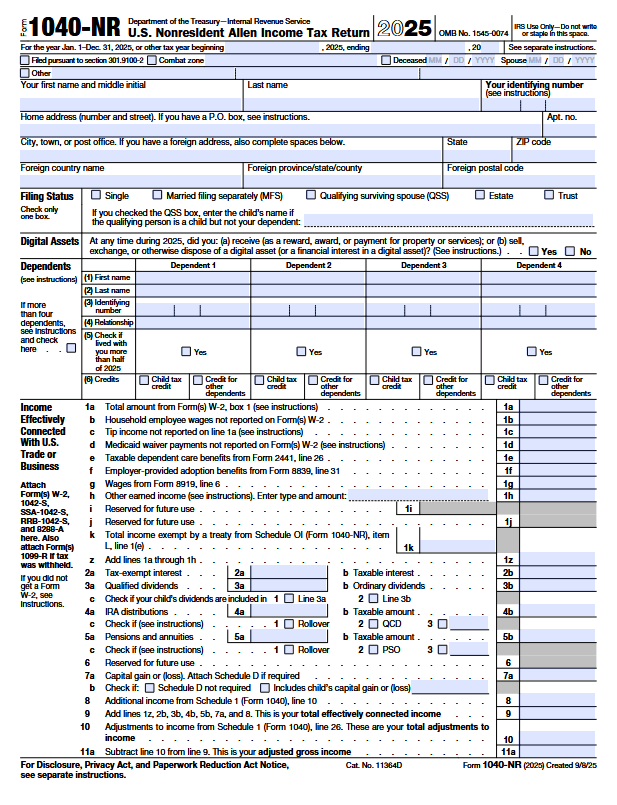
Form 1040-NR (U.S. Nonresident Alien Income Tax Return) is the income tax return form that non-U.S. entrepreneurs have to file if they had any income from U.S. trade or business throughout the year.
In short, Form 1040-NR ensures that nonresidents pay the correct tax on their U.S. income while following different rules than residents filing Form 1040.
Corporate Tax Filings (C-Corp)
C-Corps are treated as separate taxable entities. This means the entity files its own federal tax return, and additional reporting may be required when profits are distributed.
Form 1120 (U.S. Corporation Income Tax Return): All C-Corps are required to report their income, gains, losses, deductions, and credits, and to figure their income tax liability.
All C-Corps must file this form annually, whether they have taxable income or not. Foreign-owned disregarded entities are also required to file a pro forma Form 1120 with Form 5472 attached for reporting purposes.
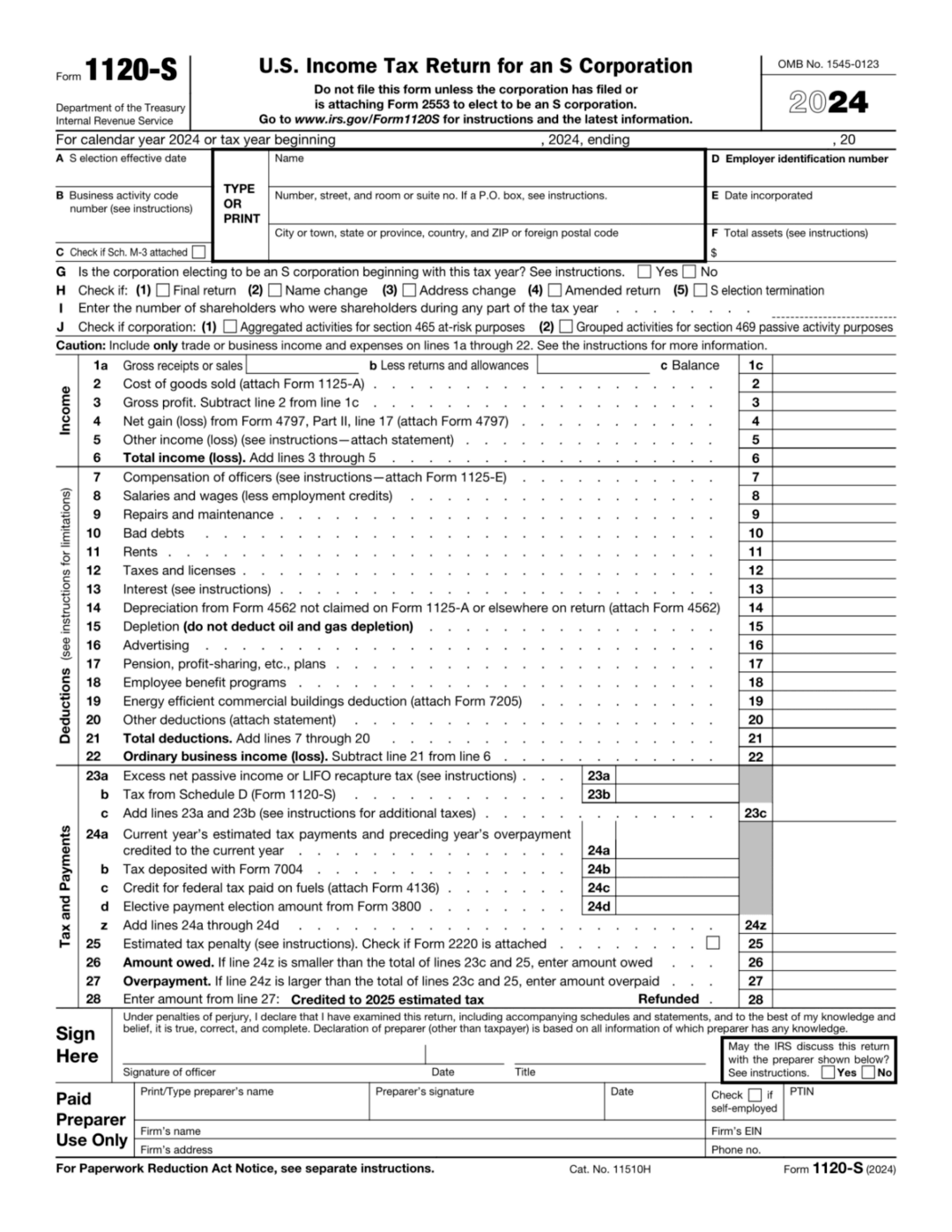
Form 5472 (Information Return of a 25% Foreign-Owned U.S. Corporation): Mandatory if a foreign person (individual or corporation) owns at least 25% of the U.S. corporation, primarily to report transactions between the foreign owner and the US entity.
Form 1042/1042-S: These forms are used by withholding agents to report and pay taxes on U.S.-source income paid to foreign persons (e.g., dividends, royalties,30% withholding).
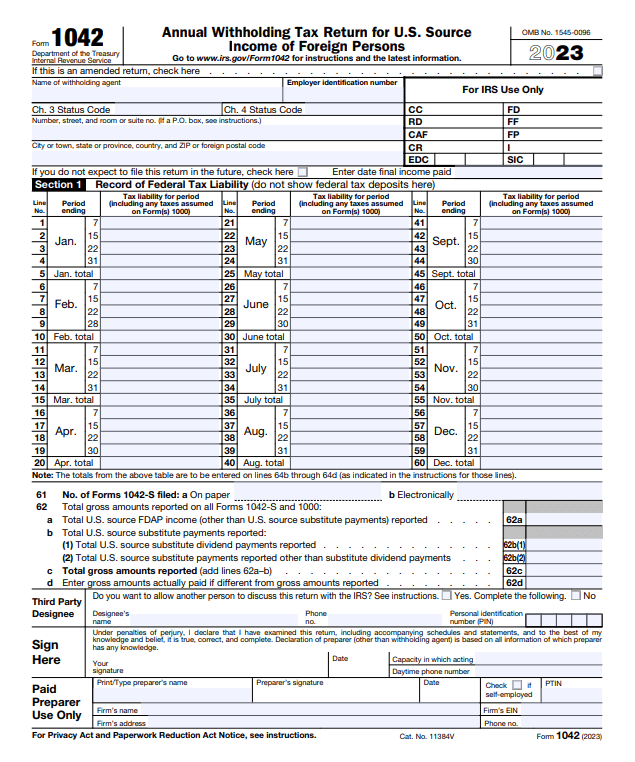
Form 1042 is the annual summary return, while 1042-S reports specific recipient income/withholding. Both are generally due by March 15th.
If the corporation pays dividends or certain types of income (FDAP) to foreign owners, they may be required to withhold tax and report it on these forms.
Even if a C-Corp is pre-revenue or operating at a loss, it must still file annual returns.
State-Level Compliance
State-level compliance is enforced independently and often has its own deadlines and penalties.
Annual Reports
Most states require companies to file an annual (or biennial) report to confirm current company details, registered agent information, and anagement or officer information.
This report keeps the company in “good standing.” Missing it can lead to late fees, loss of good standing, or administrative dissolution.
Apart from state authorities, nanks and payment processors may also use these reports to check state status periodically, and a lapse can result in account restrictions or re-verification.
Franchise Tax
Some states impose a franchise tax or annual fee for the privilege of maintaining a registered entity in that jurisdiction. This tax is often due regardless of income or activity.
Founders sometimes assume franchise tax is optional or income-based. It is not.
All Delaware LLCs must pay an annual flat-fee franchise tax of $300, due on or before June 1 each year, regardless of business activity or income.
Registered Agent Renewal
LLCs have to renew their egistered agent services annually and inform the state authorities if they’re changing their registered agent.
This is one of the simplest compliance items to maintain, and one of the most commonly overlooked.
India-Specific Considerations
Indian founders must also be aware of certain India-side obligations. These do not prevent you from owning a U.S. company, but they do require attention.
FEMA Compliance
Under India’s Foreign Exchange Management Act (FEMA), Indian residents are generally required to disclose foreign investments and assets.
A U.S. company owned by an Indian resident typically qualifies as a foreign asset.
Reporting Foreign Income
Income earned through a U.S. company may need to be disclosed in Indian tax filings, depending on the structure and distribution.
Cross-border income should be reported accurately when profits are repatriate, dividends are paid, or founder compensation is involved.
Timeline
Registering a U.S. business is not slow, but it is sequential. Each step depends on the accuracy of the previous one.
If you do everything by the books, the entire process typically takes two to four weeks from start to finish.
When done poorly, it can stretch into months.
The timeline below reflects a realistic, execution-first scenario for an Indian founder using standard pathways such as a Delaware entity, remote banking and no SSN.
| Stage | Estimated Time |
| Company registration | 1–5 days |
| EIN issuance | 1–21 days |
| Bank account | 2–10 days |
| Fully operational | ~2–4 weeks |
It’s important to understand that these are not independent timelines. Delays in EIN issuance, document inconsistencies, or unclear business descriptions almost always cascade into banking delays.
The EIN step is the biggest variable. In some cases, it is issued within a few days. In others, especially when corrections are required, it can take several weeks.
Example Walkthrough
A solo entrepreneur based in Bangalore planning to sell private-label consumer products to U.S. customers via Amazon FBA.
The primary objective is to create a compliant U.S. business structure that allows access to Amazon, U.S. banking, and payment infrastructure without unnecessary tax or legal complexity.
Decision 1: Entity Type
Registering a single-member LLC is the ideal choice for a solo founder since he wants to sell online with no immediate plans for venture fundraising or equity issuance.
The LLC structure offers flexibility, simpler ongoing compliance, and avoids the double-taxation mechanics that can complicate C-Corps for solo foreign founders.
Importantly, this choice aligns with how banks and marketplaces typically expect Amazon FBA sellers to be structured.
Decision 2: State Selection
While other states may offer lower annual fees, Delaware provides the highest level of institutional familiarity across banks, payment processors, and marketplaces.
Delaware entities are rarely questioned during onboarding, which minimizes friction during banking and platform verification.
For a foreign founder, Delaware LLC means faster approvals and fewer follow-up questions from third parties.
🔖 Also Read: How Much Does an LLC Cost in Every State: 2026 Guide
Decision 3: Registered Agent
Next, he hire a professional registered agent to avoid ultra-low-cost agents with poor reputations and chooses a service that reliably forwards mail and sends compliance reminders.
This ensures that legal notices, state correspondence, and renewal alerts are never missed, an important safeguard for a founder operating remotely from India.
Decision 4: Register Your LLC With the State
Once the entity type and state are finalized, the founder proceeds to formally register the LLC with the state of Delaware.
The registration is completed by filing the Articles of Organization with the Delaware Secretary of State.
At this stage, the founder provids the company name, registered agent details, and basic structural information since the state does not evaluate the business model, ownership nationality, or revenue plans.
Decision 5: EIN Application
The founder applies for an EIN using Form SS-4 via fax.
He has to ensure all details on the SS-4 are aligned exactly with the formation documents and passport, including the responsible party designation and address formatting.
Decision 6: Business Bank Account
Once the EIN is issued, the founder applies for a U.S. business bank account with Mercury.
The founder submits a clear business description explaining the Amazon FBA model, expected transaction flows, and supplier relationships.
| Pre-Launch Checklist
✔️ Business Registered ✔️ EIN Received ✔️ Operating Agreement Signed ✔️ U.S. Bank Account Active ✔️ Accounting System Ready ✔️ Compliance Calendar Set |
To Summarize: How to Register a U.S. Business from India
- Entity: Single-member LLC
- Registered Agent: Delaware-based
- EIN Method: Fax (SS-4)
- Business Banking: Mercury
- Total Setup Time: 18 days
At the end of this process, the company is fully operational. It can receive Amazon payouts, pay suppliers, connect accounting tools, and operate without structural or compliance blockers.
Glossary & References
This glossary clarifies key terms used throughout this guide.
✔️ EIN (Employer Identification Number)
An EIN is a unique federal tax identification number issued by the Internal Revenue Service. It functions as the U.S. company’s equivalent of a PAN or CIN number in India.
✔️ Registered Agent
A registered agent is an individual or company authorized to receive legal and government correspondence on behalf of a U.S. business.
✔️ Pass-Through Taxation
Pass-through taxation refers to a tax structure where business income is not taxed at the company level.
Instead, profits or losses “pass through” to the owner(s) and are reported on their individual tax filings.
✔️ Authorized Shares
Authorized shares represent the maximum number of shares a corporation is legally allowed to issue, as defined in its Articles of Incorporation.


Table of Contents
What You Should RegisterBest States for Indian FoundersInformation & Documents You Need (Before You Start)Step-by-Step: How to Register a U.S. Business from IndiaPost-Registration ComplianceTimelineExample WalkthroughTo Summarize: How to Register a U.S. Business from IndiaGlossary & ReferencesHow Businesses Stay Compliant.