


If you’re trying to understand the difference between trademark and copyright, you’re not alone.
Every business creates intellectual property. Sometimes it’s obvious: a logo, a course, a software product, a podcast, or a recognizable brand name.
Other times, it’s the less visible assets quietly driving business value behind the scenes: website copy, marketing campaigns, product photography, educational materials, or proprietary content.
As an entrepreneur figuring out trademark vs copyright, here’s the simplest way to think about it:
- Trademark protects your brand identity: the name, logo, slogan, or symbol that identifies your business in the marketplace.
- Copyright protects your original creative work: the content, designs, code, or media you’ve made.
Most growing businesses need both: your business name, logo, and slogan belong in trademark territory; and blog posts, videos, website copy, and digital content fall under copyright protection.
And because intellectual property becomes increasingly important as businesses grow, many entrepreneurs choose to establish a formal business structure early.
With doola, they can streamline LLC company formation, business banking, EIN registration, and compliance support while building and protecting their business assets.
In this guide, we’ll break down trademark vs copyright, including the key differences, real-world examples, common misconceptions, and how to decide which protection your business needs.
Trademark vs Copyright: At a Glance
| Feature | Trademark | Copyright |
| What it protects | Brand identifiers (names, logos, slogans) | Original creative works (content, art, code) |
| How protection starts | Use in commerce (common law) or federal registration | Automatically at creation |
| Registration required? | No, but strongly recommended | No, but registration strengthens your rights |
| Duration | 10-year renewable terms (indefinite with renewal) | Life of author + 70 years |
| Governs | Consumer confusion / brand identity | Reproduction and distribution rights |
| Registered with | USPTO | US Copyright Office |
| ⚡ Quick decision guide:
Protecting a business brand → Trademark Protecting original content or creative work → Copyright Protecting a logo → Ideally, both |
What Is a Trademark?
A trademark is any word, name, symbol, design, sound, color, or combination of these that identifies the source of a product or service and distinguishes it from competitors.
In simple terms, trademarks protect how customers recognize your business.
When you hear “Just Do It,” you don’t think about shoes in general, you think Nike. That slogan is trademarked. The same goes for the distinctive Tiffany blue color, the shape of the Coca-Cola bottle, or the NBC chime.
These are all examples of branding elements that consumers immediately associate with a specific company or source. And that’s the core purpose of trademark law in the US: preventing customer confusion and protecting brand identity.
🔖 Related Read: Should You Trademark Before Forming an LLC? What Comes First & Why?
What Does a Trademark Protect?
Trademark protection can apply to far more than just a company name or logo.
Under US trademark law, businesses can protect a wide range of brand identifiers that help consumers recognize the source of goods or services.
Trademarks can protect:
- Business and brand names used to identify a company in commerce
- Product and service names associated with specific offerings or product lines
- Logos and visual marks that distinguish a brand visually in the marketplace
- Slogans and taglines used in advertising and brand messaging
- Distinctive packaging (trade dress) that creates recognizable product presentation
- Colors associated with a brand when consumers strongly associate them with a company
- Sounds and jingles that function as audio brand identifiers
- Podcast names used commercially as media or entertainment brands
- SaaS product names tied to software platforms and digital services
- Website URLs used as brand identifiers rather than merely web addresses
The key requirement is distinctiveness. To qualify for trademark protection, a mark generally needs to identify your business specifically, not simply describe a product or service generically.
Trademark Symbols: ™ vs ®
Trademark symbols help communicate the legal status of your brand protection and whether your mark has been formally registered.
- ™ (TM) signals that you’re claiming trademark rights in a name, slogan, logo, or brand identifier, even before federal registration. Anyone can use the ™ symbol while establishing brand rights through commercial use.
- ® (R) is reserved exclusively for federally registered trademarks approved by the USPTO. Using the ® symbol without an official federal registration is prohibited under US law and can create legal issues.
For many growing businesses, the transition from ™ to ® marks an important milestone in building a more legally protected and defensible brand.
Common Law vs. Registered Trademark
You actually get some trademark protection the moment you start using a mark in commerce; this is called common law trademark rights.
However, those rights are limited to the geographic area where you actually operate.
Federal registration through USPTO provides significantly stronger legal protection, including:
- Nationwide priority rights over later users in similar categories
- A legal presumption of ownership and exclusive rights to the mark
- The right to use the ® symbol publicly and commercially
- The ability to block infringing imports through US Customs enforcement
- A much stronger position in lawsuits involving infringement or brand confusion
- Public notice of ownership through the federal trademark database
For businesses planning to scale nationally or build long-term brand equity, federal registration is often one of the most important steps in protecting the value of the business itself.
| You Likely Need a Trademark If…
✔️ You run a business with a distinct name or brand ✔️ You sell products or services under a recognizable mark ✔️ You’ve invested in branding and want to own it exclusively ✔️ You want to stop competitors from using confusingly similar names ✔️ You’re scaling and need legal protection against counterfeiting or fraud |
What Is a Copyright?
Copyright is the automatic legal protection that attaches to an original work the moment you create it and fix it in a tangible form, whether that’s a document saved to your hard drive, a photo on your phone, or a video uploaded to YouTube.
You don’t have to register, mail anything, or pay a fee for copyright to exist. It’s yours as soon as you make it.
What Does a Copyright Protect?
Copyright covers original creative works, including:
- Blog posts, articles, and written content published online or offline
- Books, scripts, and plays created for publication or performance
- Photography and illustrations including original visual artwork and graphics
- Videos and films uploaded, distributed, or commercially produce
- Music compositions and sound recordings including lyrics, instrumentals, and audio production
- Software code including source code, applications, and digital programs
- Online courses and educational content such as lesson plans, PDFs, templates, and training video
- Website copy and design elements including original written and visual website content
- Architectural works involving original building designs and plans
- Compilations of data where the selection, organization, or arrangement reflects original creativity
For modern businesses, copyrights protect a significant portion of what they create every day.
What Copyright Does NOT Protect
This is where a lot of first-time entrepreneurs get confused, let’s quickly go over a few examples:
- Ideas: Copyright protects the expression of an idea, not the idea itself. You can’t copyright the concept for a productivity app; only the specific code, visuals, copy, and creative materials you create around it.
- Names, titles, and slogans: Business names, product names, and taglines are generally not copyrightable. Those are typically protected under trademark law instead.
- Short phrases: A phrase like “Just Do It” cannot be copyrighted, even though it may qualify for trademark protection.
- Facts and data: Information itself is not protected by copyright. However, an original presentation, analysis, arrangement, or compilation of that information may qualify for protection.
- Systems and methods: Processes, workflows, formulas, and methods of operation are generally not copyrightable. But the original manuals, training materials, or written instructions explaining them may be.
| In short: Copyright protects expression and not ideas or brand identity.
Basically, if you made it, copyright protects how you expressed it; not the underlying concept, and not the name you gave it. |
Trademark vs Copyright: The Key Differences
While trademarks and copyrights both fall under intellectual property law, they solve completely different business problems.
A trademark protects how customers recognize your business in the marketplace, while copyright protects the creative work your business produces.
Understanding where these protections overlap, and where they don’t, is what helps entrepreneurs avoid expensive legal mistakes later.
What Each Protects
Trademarks and copyright protect fundamentally different things. Trademark is about commercial identity; it prevents marketplace confusion about the source of goods and services.
Copyright is about creative authorship; it controls how original works are reproduced, distributed, and adapted.
How Protection Starts
One of the biggest differences between trademark and copyright is how legal protection begins in the first place.
1. Trademark: Protection begins through use in commerce. The moment you start using a name or logo in connection with selling a product or service, you have common law rights. Federal registration strengthens those rights significantly.
2. Copyright: Protection begins automatically the moment an original work is created and fixed in a tangible medium. That means once you write the article, record the video, design the graphic, or build the software, copyright protection generally already exists, no ‘filing’ is required.
Registration Requirements
Neither trademarks nor copyrights always require registration, but registration dramatically increases the legal protections available to business owners and creators.
1. Trademark: Registration is optional but highly recommended, especially for growing brands. Filing through the USPTO provides nationwide protection, stronger enforcement rights, legal presumptions of ownership, and public notice that the mark belongs to you.
2. Copyright: Registration is optional but extremely valuable, and you can file through the US Copyright Office. Registration is required before you can sue for infringement in federal court, and it also unlocks statutory damages and attorney’s fees, which can be significantly higher than actual damages alone.
Duration of Protection
Another major difference between trademark and copyright is how long the protection lasts.
1. Trademark: Can potentially last forever, as long as the trademark remains in active commercial use and renewals are filed properly. Federal trademark registrations are initially valid for 10 years and can be renewed indefinitely in additional 10-year periods.
2. Copyright: Copyright protection lasts for a fixed period of time. For works created after January 1, 1978, protection generally lasts for the life of the author plus 70 years. For works made for hire, anonymous works, or pseudonymous works, protection typically lasts 95 years from publication or 120 years from creation, whichever expires first.
Enforcement & Legal Rights
Both forms of intellectual property protection give owners legal enforcement rights, but the violations they address are very different.
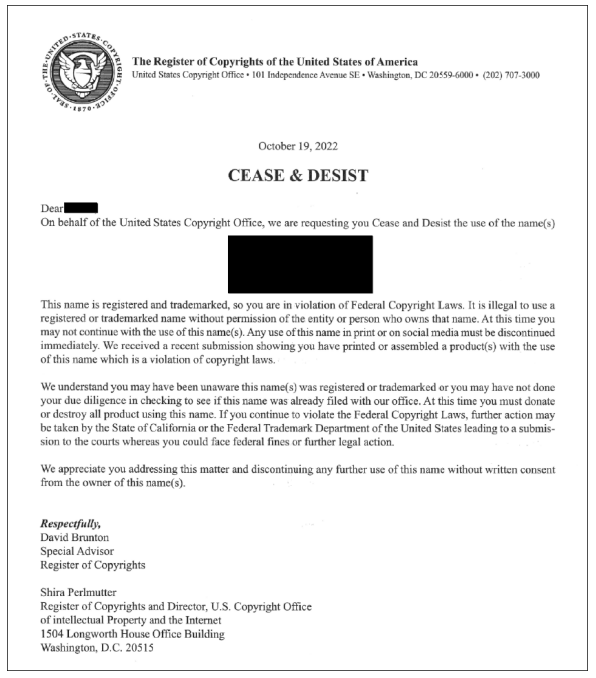
- Trademark owners can send cease-and-desist letters, file oppositions against similar marks at the USPTO, and sue for infringement. You must actively police your trademark, failure to enforce can weaken or invalidate it.
- Copyright owners have the exclusive right to reproduce, distribute, display, perform, and create derivative works. When a copyright is officially registered, creators gain significantly stronger legal remedies, including the ability to pursue statutory damages and attorney’s fees in infringement cases.
While both offer legal protection, trademark enforcement focuses on protecting brand identity, whereas copyright enforcement focuses on protecting original creative expression.
Cost Differences
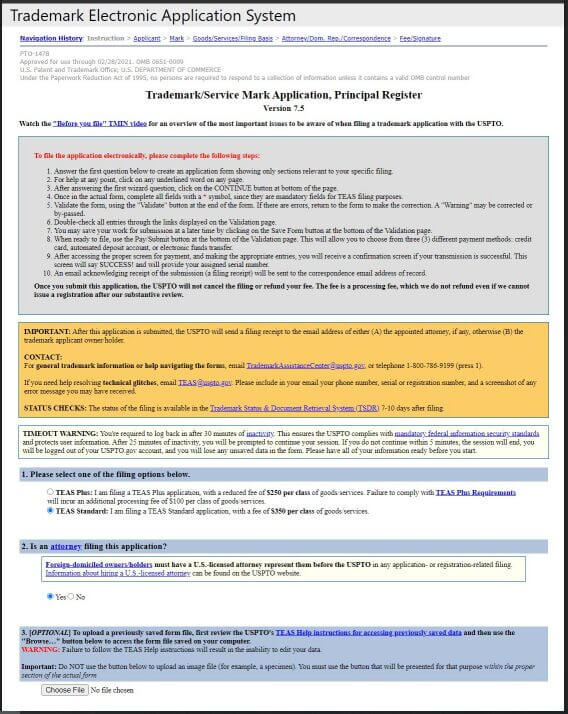
The cost of protecting your intellectual property can vary significantly depending on the type of protection you pursue and whether you use legal assistance.
- Trademark registration: USPTO filing fees typically range from $250–$350 per class of goods/services (TEAS Plus or Standard). Attorney fees will be additional if you hire one.
- Copyright registration: Filing fees are generally $45–$65 for a single work filed online. That’s far less expensive, but also less commonly needed since protection is automatic.
| 📌 As a rule: protect your brand with a trademark and any original creative work with a copyright. |
Can Something Be Both Trademarked and Copyrighted?
Yes, and this is one of the most practically important things to understand, especially if you’re an entrepreneur or creator building a brand around original content.
A single asset can carry both trademark and copyright protection simultaneously, each covering a different aspect.
Real Example: Brand Logos – Trademark or Copyright?
Take a custom-designed logo, for instance:
- Copyright protects the artistic design itself; the specific illustration, arrangement of shapes, choice of colors, and original graphic elements. This protection is automatic from the moment a designer creates it.
- Trademark protects the logo as a brand identifier; its association with your company in the marketplace. This protection comes through use and registration.
If someone copies your logo to sell competing products, you can go after them under trademark law (they’re causing consumer confusion) and copyright law (they reproduced your protected artwork). That’s dual protection in action.
Other Common Examples of Dual Protection
Some of the most recognizable business assets in the world carry two layers of protection simultaneously:
Copyright for the creative work and trademark for the brand identity attached to it.
Here’s how that works across industries:
| Asset | Copyright Covers | Trademark Covers |
| Logo | The artistic design | Brand association |
| Brand mascot | The illustrated character | The character as a brand identifier |
| Product packaging | The original graphic design | Trade dress / source identification |
| App icon | The artwork | The mark as a product identifier |
| Brand illustration | The creative work | Use as a brand symbol |
The best way to understand where trademark and copyright intersect is to look at how entrepreneurs and creators use them across different business models. We will cover that next.
Trademark vs. Copyright: Real Business Examples and Use Cases
The easiest way to understand trademark vs copyright is to look at how they apply in real businesses.
Most modern companies don’t create just one type of intellectual property (IP); they create a mix of branding and creative assets that often require different layers of protection.
- Clothing brand: Your original apparel artwork, graphics, and custom illustrations are protected by copyright law. Your brand name, logo, slogan, and recognizable product branding function as trademarks because they identify your business in the marketplace.
- YouTube channel: Your videos, scripts, thumbnails, intro music, and edited content are protected by copyright. Your channel name, logo, catchphrase, and overall channel branding may qualify for trademark protection as audience and “brand recognition” grow.
- Online course brand: Your lesson videos, PDFs, worksheets, templates, presentations, and educational materials are copyrighted creative works. Your course name, coaching framework name, and course logo can function as trademarks if they’re being used to identify your business or educational brand.
- SaaS Businesses: Your source code, UI designs, onboarding content, documentation, tutorials, and product assets are generally protected by copyright. Your app name, platform branding, logo, and product identity are protected through trademark law.
Once you start viewing your business through the lens of brand assets versus creative assets, the difference between trademark and copyright becomes much easier to identify, and much easier to protect strategically as your business scales.
Trademark vs Copyright vs Patent
Sometimes entrepreneurs get all three confused, especially when they’re building something new. Here’s the quick breakdown to make it easier for you to understand:
| Feature | Trademark | Copyright | Patent |
| Protects | Brand identity | Creative expression | Inventions and innovations |
| Examples | Brand names, logos, slogans | Content, art, code, and music | Products, processes, software innovations |
| How you get it | Use + optional registration | Automatic at creation | Must apply and be approved |
| Duration | Indefinite (with renewal) | Life + 70 years | 20 years (utility) and 15 years (design) |
| Agency | USPTO | US Copyright Office | USPTO |
Which One Do You Need?
The easiest way to determine which protection you need is to start with the asset itself.
Here’s a detailed breakdown of which type of protection generally applies to different business assets.
| If You Want to Protect… | You Need… |
| A brand name or logo | Trademark |
| Blog posts, videos, courses | Copyright |
| A new invention or product | Patent |
| Software code | Copyright (+ potentially patent for novel methods) |
| A new product design | Design patent + possibly trademark |
| All of the above | A good IP attorney |
Patents are significantly more expensive and time-consuming to obtain than trademarks or copyrights, but they provide the strongest protection for genuine innovations.
Real-World Examples of Trademark vs Copyright
Sometimes the clearest way to understand this is through concrete examples.
What Should Be Trademarked?
- Nike: The “Nike” name, the swoosh logo, and “Just Do It” are all federally registered trademarks.
- Your Shopify store name: The brand name under which you sell products is a trademark candidate.
- Your podcast name: “The Tim Ferriss Show” functions as a trademark because it identifies a source of content.
- Your SaaS product name: “Notion,” “Canva,” “Figma”, all trademarked.
- Your mobile app name: The name consumers see in the App Store is a brand identifier. Trademark it.
What Should Be Copyrighted?
- Your e-book or course: The written content, slide decks, videos, and workbooks are all automatically copyrighted.
- Your website copy: Every original sentence on your site is copyright-protected from the moment you write it.
- Your YouTube videos: The video content itself, the scripts, the thumbnail artwork, all copyrighted.
- Your software code: The actual codebase of your app is protected by copyright, separate from any trademark on its name.
- Your photography: Any original photos you take are yours the instant you take them.
The Dual-Protection Case: A Brand Logo
Say you hire a designer to create a logo for your e-commerce brand. The moment it’s created:
- Copyright attaches to the original artwork (make sure you have a work-for-hire agreement or rights assignment from the designer).
- Once you start using it in commerce and register it with the USPTO, trademark protects it as a brand identifier.
Two layers. One asset. Stronger protection overall.
Do Small Businesses and Creators Need Both?
For most modern businesses, yes. And here’s why.
Every business creates two types of protectable assets:
- Brand assets: Name, logo, tagline, brand visuals. These need trademark protection.
- Content assets: Website copy, blog posts, videos, courses, software, photos. These are protected automatically by copyright, but registration matters if you ever need to enforce.
| Business Type | Trademark Priority | Copyright Priority |
| E-commerce brand | Brand name, logo, product names | Product photos, website copy |
| SaaS startup | Product name, logo | Codebase, UI assets, documentation |
| Online course creator | Course brand name | Course content, videos, workbooks |
| Agency | Agency name and logo | Client deliverables (check contracts), original frameworks |
| YouTuber / Creator | Channel name, logo | Videos, scripts, thumbnails |
| Coach or consultant | Personal brand name | Written frameworks, programs, content |
Bottom line: Most online businesses benefit from both trademark and copyright protection. They cover different things and work together, not against each other.
How to Decide Whether You Need Trademark or Copyright
For most entrepreneurs, the confusion isn’t understanding what trademarks and copyrights are; it’s figuring out which one actually applies to the thing they’re building.
The easiest way to approach this is to identify whether you’re protecting a brand identifier or original creative work.
Use this quick decision guide as a starting point:
| If You Want to Protect Your… | You Need… |
| Business Name | Trademark |
| Logo | Trademark + copyright |
| Tagline or slogan | Trademark |
| Website content | Copyright |
| Blog posts and articles | Copyright |
| Online course | Copyright (+ trademark for the brand) |
| App name | Copyright |
| App code | Copyright |
| Product name | Trademark |
| Photography | Copyright |
| Original illustrations | Copyright (+ trademark if used as brand mark) |
| Podcast name | Trademark |
Now while a modern e-commerce brand may trademark its store name while copyrighting product photography and marketing content, a SaaS company may trademark its platform name while copyrighting its software code and UI copy.
So, in many cases, the answer isn’t trademark or copyright; it’s both.
🔖 Related Reading: Trade Name vs. Business Name: What’s the Difference?
When to File for Trademark
Trademark registration becomes increasingly important as your business grows, especially once your brand starts building recognition, trust, and commercial value in the market.
You should strongly consider filing for trademark protection when:
- You’re ready to invest in a brand long term
- Competitors are using similar names and creating customer confusion
- You’re expanding into new products, services, or markets
- Your business is gaining traction online
- You want nationwide legal protection
- You want the ® symbol and the stronger enforcement rights that come with federal registration
The earlier you secure a trademark, the lower the risk of expensive rebranding issues, legal disputes, or brand confusion later.
When Copyright Registration Matters
Even though copyright protection begins automatically upon creation, formal registration can become extremely valuable for creators and businesses producing commercially important content.
Copyright registration matters most:
- Before you publish or launch widely (gives you stronger enforcement options)
- If you’re creating high-value content (courses, software, books) where infringement is a real risk
- If you need to sue someone for infringement (registration is required to file in federal court)
In the US, copyright registration is required before filing a federal infringement lawsuit, and it may also unlock statutory damages and attorney’s fees that can significantly strengthen your legal position.
When to Consult an Attorney
If your IP is central to your business value, (and for most businesses and creators, it is), it’s worth at least a one-hour consultation with an IP attorney before filing anything.
Trademark clearance searches, proper class selection, and rights assignment agreements (especially with contractors and designers) are areas where mistakes are expensive to fix.
Common Trademark vs Copyright Misconceptions
The internet is filled with conflicting advice about trademarks and copyrights, especially around logos, business names, and digital content. Here’s where many entrepreneurs accidentally misunderstand how these protections actually work.
Can I copyright a business name?
No. Business names, brand names, product names, and slogans are not copyrightable. They may be protectable as trademarks, but copyright law doesn’t cover them. Copyright protects original creative expression, not identifiers.
Is copyright enough to protect my logo?
Not fully. Copyright automatically protects the artistic design of your logo. But copyright alone doesn’t prevent a competitor from using a visually similar name or mark to confuse your customers, that’s a trademark’s job.
For logos, both protections working together give you the most complete coverage.
Can someone trademark my copyrighted work?
It’s theoretically possible for someone to register a trademark for an element of your work if it functions as a brand identifier and you haven’t already done so. This is one reason why proactive trademark registration matters.
Waiting until someone else files can create expensive disputes.
Is trademark protection automatic?
Common law trademark rights are automatic upon use in commerce, but they’re limited in scope. Federal trademark registration is not automatic. You have to apply for it through the USPTO, and the process typically takes 8–12 months.
Does copyright protect AI-generated content?
Currently, no; not in the US. Their official Copyright Office has consistently held that copyright protection requires human authorship. AI-generated content without meaningful human creative input is not protectable.
Content you create with AI assistance, where you make significant creative choices, may be partially protectable; this area of law is still evolving.
Do trademarks expire?
Not if you maintain them. Federal trademark registrations last 10 years and are renewable indefinitely, as long as you keep using the mark and file the required renewal paperwork with the USPTO. If you abandon a mark, you can lose it.
Is a domain name trademarked?
Not automatically. A domain name itself is just an address; it’s registered through a domain registrar, not the USPTO. However, if you use a domain as a brand identifier (which most US businesses do), your brand name within the domain may be eligible for “trademark protection”.
Having a domain does not give you trademark rights.
Protect Your Business Assets With doola

Understanding your IP is one thing. Actually building and running a business is another, and that’s where having the right infrastructure matters.
doola helps entrepreneurs, creators, and online businesses manage the financial side of their operations so they can focus on building.
From LLC formation and EIN registration to US business banking, bookkeeping, tax support, annual filings, and compliance management, doola gives entrepreneurs a centralized platform to build and run their business with confidence.
Ready to build your business on a strong foundation? Form your US business with doola today.
FAQs

What is the difference between trademark and copyright?
Trademark protects brand identifiers: names, logos, and slogans, that identify the source of goods or services. Copyright protects original creative works: content, art, code, and music, from the moment they’re created. Both are forms of intellectual property protection, but they cover entirely different types of assets.
Is a logo trademarked or copyrighted?
Both, ideally. The artistic design of a logo is automatically protected by copyright. The logo as a brand identifier, its association with your company in the marketplace, is protected by trademark registration. For full protection, you want both.
Can a logo be copyrighted and trademarked?
Yes. This is called dual protection and it’s common for brand assets. Copyright covers the original artwork; trademark covers the mark’s commercial function as a brand identifier. Registering for both gives you the strongest position against infringement.
What does a trademark protect?
A trademark protects words, names, symbols, logos, slogans, sounds, and other marks that identify the source of goods or services and distinguish them from competitors. It prevents others from using confusingly similar marks in the same market.
What does copyright protect?
Copyright protects original works of authorship fixed in a tangible medium, including writing, photography, music, video, software code, and visual art. It gives the creator exclusive rights to reproduce, distribute, display, and create derivative works.
Do I need a trademark or copyright for my business?
Most businesses need both. Trademark protects your brand identity (name, logo, tagline). Copyright automatically protects the content and creative work you produce (website copy, videos, courses). They’re complementary, not interchangeable.
Can you trademark a copyrighted work?
An element of a copyrighted work can also be trademarked if it functions as a brand identifier in commerce. A logo is the most common example: copyrighted as artwork, trademarked as a brand mark.
Can you copyright a business name?
No, business names are not copyrightable. Copyright protects creative expression; it doesn’t cover names, titles, or short phrases. To protect a business name, file for trademark registration with the USPTO.
What’s the difference between trademark, copyright, and patent?
Trademark protects brand identity. Copyright protects creative expression. Patent protects inventions and innovations.
All three are forms of intellectual property, but they serve different purposes, are governed by different laws, and require different processes to obtain.
Does copyright protect logos?
Copyright protects the original artistic design of a logo automatically.
However, copyright alone doesn’t prevent others from using a confusingly similar mark to trade on your brand, that requires trademark protection. For logos, both forms of protection are recommended.